
Every chilli season starts with the same small act of faith: a seed pressed into warm mix, and then the waiting. Get the conditions right and most chilli seeds are easy. Get them wrong — cold mix, soggy trays, seeds buried too deep — and you’ll be left wondering whether the packet was a dud. Learning how to germinate chilli seeds properly is the difference between a tray of healthy seedlings and a month of staring at bare soil.
Here’s the grower’s version. Chilli seeds need three things to sprout reliably: warmth, even moisture, and patience — more patience for some varieties than others.
The quick answer: sow chilli seeds about 5 mm deep in damp seed-raising mix, keep the mix at a steady 27–30°C (a thermostat-controlled heat mat is the easiest way), and keep it damp but never soggy. Most chillies emerge in one to two weeks. Superhots like the Carolina Reaper and Ghost Pepper can take four to six weeks — that’s normal, not failure.

Why warmth matters more than anything
If there’s one number to remember, it’s the temperature of the mix. Chilli seeds are tropical in origin and they will not be hurried by a warm room if the mix itself is cold. Most Australian homes in late winter are simply too cool for good chilli germination without help.
The sweet spot for the mix is 27–32°C. In that range, fresh seed of most varieties is up in about a week. Cooler than that and germination slows and turns patchy; much cooler and it stalls altogether. Different chillies also have different preferences:
| Chilli type | Preferred mix temperature |
|---|---|
| Jalapeño, cayenne, poblano and other mild types | 20–24°C |
| Habanero, Ghost Pepper, Scorpion, Reaper (superhots) | 26–30°C |
| A good all-round setting if you grow a mix | 27–28°C |
The key point: it’s the temperature of the mix, not the air, that counts. A north-facing windowsill can feel warm at midday and drop well below 15°C in the mix overnight. Steady warmth beats a daytime spike followed by a cold night every time.
Why superhots are the slow kids
This is the question we get most. You sow a jalapeño and a Carolina Reaper on the same day; two weeks later the jalapeño is up and the Reaper is nowhere to be seen. Nothing’s wrong — superhots are just slower. (If you’re choosing between them, here’s how the Carolina Reaper, Ghost Pepper and Trinidad Scorpion compare.)
The quick, mild chillies most of us start with — jalapeño, cayenne, serrano — are Capsicum annuum, the sprinters of the family. The superhots — Carolina Reaper, Ghost Pepper (Bhut Jolokia), Trinidad Scorpion, habaneros — are a different species, Capsicum chinense, and they’re the tortoises. They want warmer mix and more time, and Ghost Peppers in particular can take up to five or six weeks even in good conditions. Wrong temperature is the most likely reason a tray of superhots never comes up.
It’s a common saying that superhot seed has a tougher coat. What’s clearer is that seed coats harden as seed ages, whatever the variety, which is why old seed is slower and benefits from a soak (more on that below). With fresh seed, warmth and patience do the job.
| Chilli type | Species | Typical time to emerge at 27–30°C |
|---|---|---|
| Jalapeño, cayenne, serrano | C. annuum | 1–2 weeks |
| Habanero, Scotch Bonnet | C. chinense | 1–3 weeks |
| Ghost, Scorpion, Reaper | C. chinense | 2–6 weeks |
Seed older than a year, or mix running cooler than ideal, pushes every one of those ranges out.
The reliable method, step by step
- Use fresh seed-raising mix, not potting or garden soil. Garden soil is heavy, drains poorly and isn’t sterile — a recipe for rot. A fine, airy, nutrient-free seed-raising mix gives roots room and air.
- Moisten the mix first so it clumps when squeezed but doesn’t drip. If you can squeeze water out of a handful, it’s too wet.
- Sow 3–6 mm deep, one or two seeds per cell, and cover lightly. Chilli seeds germinate in darkness, so a thin cover is exactly what they want. Deeper than about 6 mm and seedlings struggle to reach the surface.
- Add bottom heat. A seedling heat mat with a thermostat, set to 27–28°C, is the single biggest upgrade you can make. More on getting that right below.
- Cover to hold humidity. A clear lid or propagator dome keeps the surface from drying out. Lift it every day or two — germinating seed needs oxygen as much as it needs moisture.
- Keep it damp, never soggy. Mist lightly or bottom-water rather than pouring from a can, which shifts the mix and the seed. Then wait — and resist the urge to dig a seed up “just to check.”
- Give light the moment they emerge. As soon as you see green, the lid comes off and the seedlings go under bright light (see below).
Getting bottom heat right (and not cooking your seeds)

A heat mat transforms your success rate, but an unregulated one can do real damage. A bare mat with no thermostat simply stays on and keeps climbing, and it dries the mix out much faster than you’d expect.
- Use a mat with a thermostat and a soil probe. Push the probe into the mix, not the air, and set it to 27–28°C.
- Check the actual mix temperature with a cheap soil thermometer for the first day. Don’t trust the dial alone.
- Watch the moisture. Mats dry trays quickly; check daily and mist or bottom-water as needed.
- Take the mat and the dome away once most seeds are up. Seedlings want air moving around them and don’t need the extra heat.
- No heat mat? The top of the fridge, a hot-water-system cupboard, or any spot that holds a steady 25°C or more will do — just check it doesn’t go cold overnight. Expect slower, patchier results than a mat.
Moisture, and the enemy called damping-off
The fastest way to lose a tray of seedlings is damping-off — a rot caused by several soil-borne fungi that attacks seed before it emerges or makes seedlings collapse at the soil line. It thrives in cool, wet, still conditions, and overwatering before emergence makes it worse. Slow germination gives it more time to take hold, which is another reason to keep the mix warm.
Three habits keep it away:
- Start with a sterile mix and clean containers. Reused pots and trays are worth a wash in a weak bleach solution, rinsed well.
- Don’t overwater. Damp, not drowning. Soggy mix starves the seed of oxygen and invites rot; bone-dry mix stops germination. Let the surface dry very slightly between waterings once seeds are up.
- Give them air. Vent the dome daily during germination, remove it once seedlings are up, and if you can, run a small fan on low nearby. Moving air is a seedling’s friend.
Light: none to start, lots once they’re up
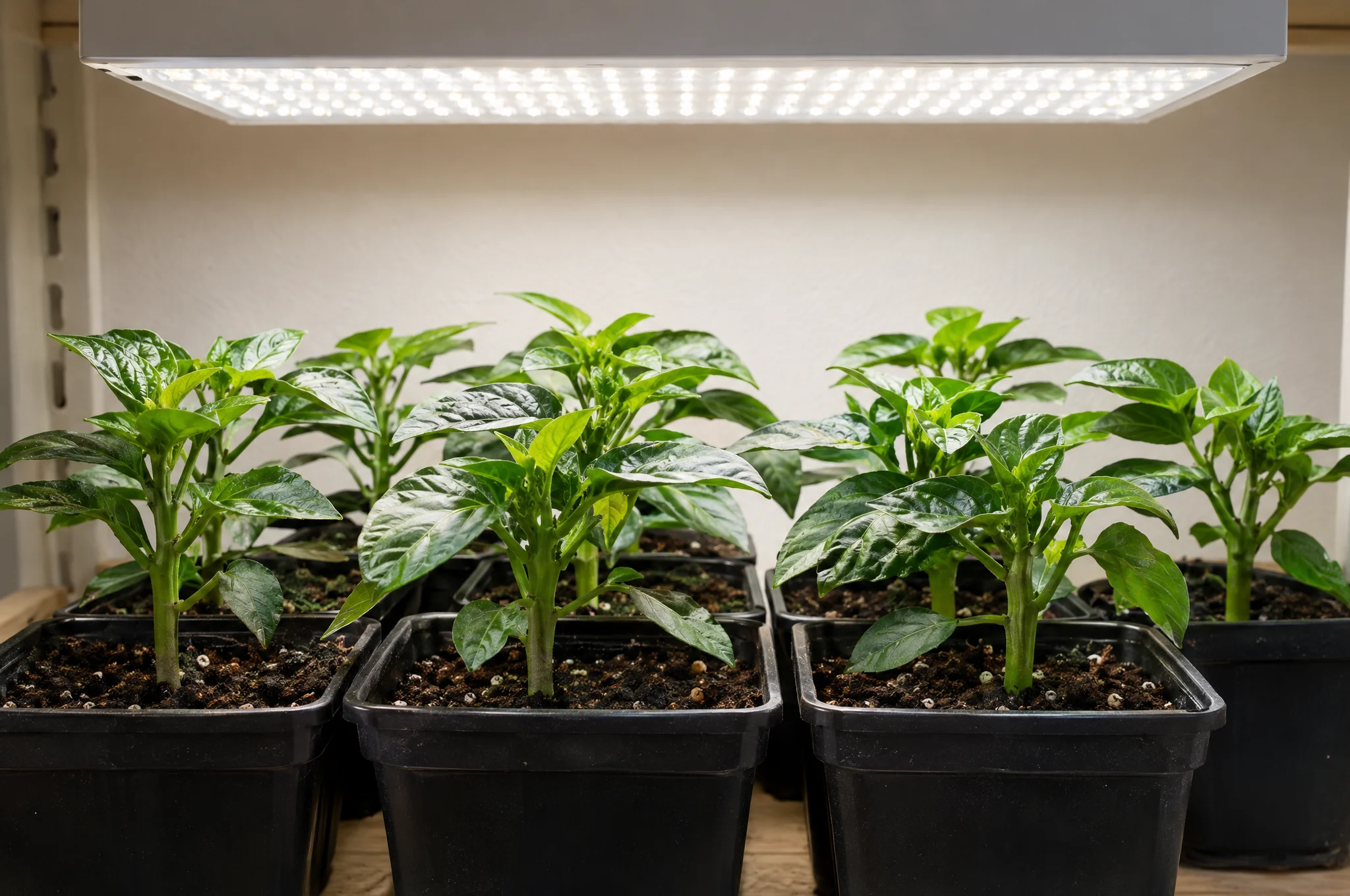
Here’s a point that trips people up. Chilli seeds don’t need light to germinate — which is why you cover them and why a dim cupboard on a heat mat works fine. But the instant they break the surface, the priority flips completely.
Seedlings need bright light for 14–16 hours a day. A small LED seedling light sits a few centimetres above the leaves; a bigger panel sits higher and is run at reduced power for the first few weeks so tender leaves don’t burn. Raise the light as they grow, and if leaves start curling or scorching, it’s too close.
A windowsill rarely cuts it in an Australian winter, even a north-facing one. The light is too weak, too short and comes from one side, so seedlings stretch, go pale and flop. Leggy seedlings are almost always a light problem, not a water one. A gentle fan helps thicken stems, but it won’t fix a lack of light.
Do pre-treatments actually work? The honest answer
Soaking seeds, chamomile tea, hydrogen peroxide, a few days in the fridge — the internet is full of germination hacks. Here’s where experienced growers actually land:
| Trick | Worth it? |
|---|---|
| Nothing at all | Best for fresh seed. Sown straight into warm mix on a heat mat, fresh seed of most varieties is up within a week or two. Many of the best growers do nothing else. |
| Plain water soak | Helps a little with older seed by softening the coat and speeding water uptake. Two to three days is the usual advice. Harmless, modest benefit. |
| Cold black tea or chamomile soak (24–48 hours) | The go-to for old or stubborn seed. The tannins soften a hardened coat; chamomile may also help against mould. Sow the seed while still wet. Don’t go past 48 hours. |
| Hydrogen peroxide soak | No better than a tea soak in grower trials. Skip it. |
| A few days in the fridge before sowing | Popular with some growers, who report faster and more even germination. Unproven — treat it as an experiment, not a rule. |
| The float test | Unreliable. Floating seed germinates often enough that you shouldn’t throw it out. |
The bottom line: with fresh seed and the right warmth and moisture, you don’t need any of it. Pre-treatments are for reviving older seed, not standard practice.
Why chilli seeds fail to germinate (the usual suspects)
Nearly every failed tray comes down to one of three things — wrong temperature, wrong moisture, or old seed — with a couple of lesser culprits behind them:
- Too cold — the number-one cause, and the most likely reason superhots never show. A cool room in July is not a propagator.
- Too wet — rot and damping-off from soggy, airless mix.
- Dried out — a mat with no thermostat, or a dome left off, bakes the surface and stops germination dead.
- Old or poorly stored seed — seed kept cool, dry and dark lasts for years, but seed left in a hot shed loses viability fast. Older seed is slower and patchier, and worth soaking first.
- Sown too deep — anything past about 6 mm is a struggle.
- Pulled too early — superhots can take over a month. Give them time.
When to pot on and harden off
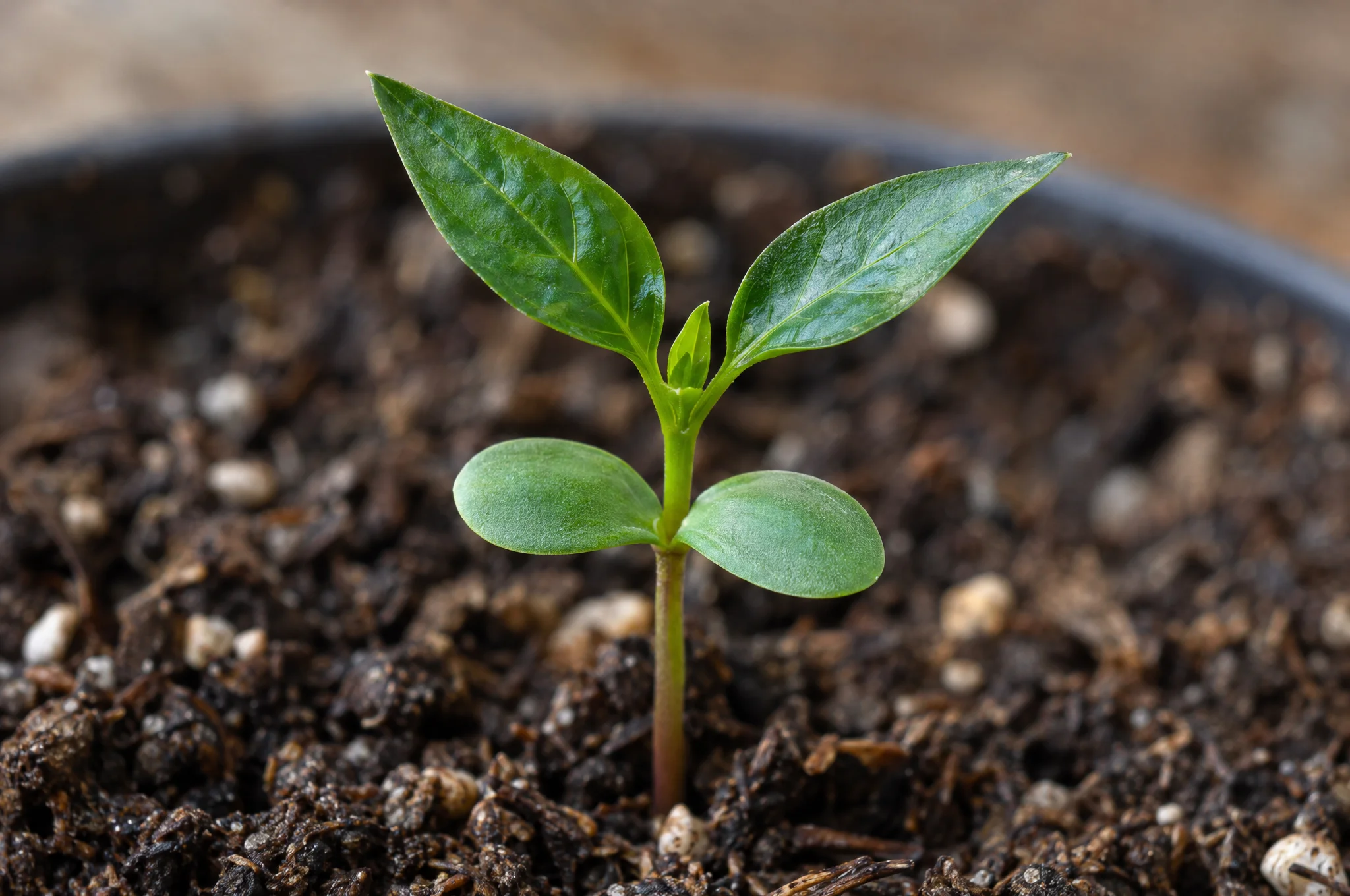
Once a seedling has its first pair of true leaves (the second set, above the rounded seed leaves) and stands 5–8 cm tall — usually two to three weeks after sprouting — it’s ready to move into its own small pot of proper potting mix. Seed-raising mix has little food in it, so start feeding lightly at quarter strength from about a week after emergence, and keep the seedlings under lights while they grow on.
Before planting out, harden off over two to three weeks: start with an hour or so outside in a sheltered, shaded spot on a mild day, build up the time and the sun gradually, and bring them in if the night is going to drop below about 13°C. Chillies go out permanently once nights stay reliably above that.
Australian timing. In the southern half of the country — Perth and the South West, Adelaide, Melbourne, Hobart, Canberra and inland NSW — that means sowing indoors on heat from late July to early September, potting on through spring, and planting out from October into November once the nights have warmed. Sow superhots at the earlier end; they need the extra weeks. In Sydney and the subtropics you can sow a little earlier and plant out from September. In the tropics, chillies grow close to year-round and the main thing to avoid is sowing into the worst of the wet season heat and humidity, when damping-off is at its most aggressive. For the full regional breakdown, see our guide on when to plant chilli seeds in Australia.
Ready to start a tray?
Germination rewards warmth and patience more than any clever trick. Hold the mix at 27–30°C, keep it damp, give superhots the time they need, and you’ll have a bench full of seedlings before spring is out. Browse our chilli seeds and pick your heat level — from easy-going beginner varieties to the superhots that test your patience in the best way.
Frequently asked questions
Do I need to soak chilli seeds before planting?
Not for fresh seed. With warm, damp mix it comes up fine without any help. Soaking is worth doing for seed more than a year or two old, whose coat has hardened: 24–48 hours in cold black tea or chamomile, sown straight away while still wet. For normal sowing, skip it and focus on temperature and moisture.
How long do chilli seeds take to sprout?
Most chilli seeds sprout in one to two weeks at 27–30°C. Mild types like jalapeño and cayenne can be up in a week; superhots such as the Carolina Reaper and Ghost Pepper often take three to six weeks. Keep them warm and don’t give up too soon.
Why won’t my chilli seeds germinate?
The most common reason is cold mix — superhots in particular stall when the mix sits below their preferred range. Other causes are soggy mix, seed sown too deep, letting the mix dry out, old seed, or simply pulling them up before their time. Fix the temperature first.
Is it better to germinate chilli seeds in soil or paper towel?
Both work. Paper towel lets you watch for sprouting and test old seed, but the sprouts are fragile and must be potted up carefully before they go leggy. For most growers, sowing straight into warm, damp seed-raising mix on a heat mat is simpler, less fiddly and gives better results. Whichever you use, warmth is what matters.
How can I make chilli seeds germinate faster?
Warmth is the lever. A thermostat-controlled seedling mat holding the mix at 27–30°C can roughly halve the time compared with a cool windowsill. Keep the mix evenly damp, sow only 3–6 mm deep, vent the dome daily, and hold the temperature steady day and night. That alone beats any soaking trick.
When should I sow chilli seeds in Australia?
In the southern states and the South West of WA, sow indoors on heat from late July to early September and plant out in October–November once nights stay above about 13°C. In Sydney and the subtropics you can go a few weeks earlier at each end. In the tropics you can sow most of the year; just avoid the peak of the wet. Wherever you are, superhots should go in at the start of your window — they need the extra weeks to germinate and mature before the season ends.